
Probate Litigation and Estate Disputes in Tennessee – What You Should Know
Probate litigation in Tennessee can complicate estate administration when disputes arise over wills, inheritance, assets, or a personal representative’s actions. This post explains how these disputes arise, how to resolve them, and how litigation works.
What Is Probate Litigation in Tennessee?

Probate litigation is a legal process that occurs when a dispute involving a deceased person’s estate requires court intervention, including challenges to a will, rights to estate property, or concerns about the administration and distribution of estate assets.
What is an estate dispute?
An estate dispute is a disagreement between people or entities with competing interests in a deceased person’s estate.
Disputes may involve the validity or interpretation of a will, inheritance rights, ownership of estate property, creditor claims, or concerns about how an executor or administrator is managing the estate.
Below is a summary of the most important differences between an estate dispute and litigation:
Probate Litigation | Probate Dispute |
| A disagreement involving an estate or the rights of interested parties that may be resolved through negotiation, mediation, or settlement. |
Governed by applicable Tennessee statutes, court rules, and procedures. | May be handled informally before formal court proceedings become necessary. |
Usually requires more time and legal expense. | May be resolved more quickly and at a lower cost. |
The court may issue binding orders or judgments. | The parties may reach a voluntary settlement. |
What Causes Probate Disputes in Tennessee?
After the death of a loved one, disagreements may arise among family members and other interested parties over the estate.
Identifying and resolving these concerns early may help prevent a conflict from developing into probate litigation. Common causes of contested probate matters in Tennessee include, but are not limited to:
Conflicts between heirs and beneficiaries
Who may have different expectations about the estate, the deceased person’s wishes, or the distribution of the probate property. If these disagreements affect inheritance rights, they may develop into legal disputes.
Concerns about how an executor or administrator manages the decedent’s estate
Personal representatives are expected to administer the estate according to Tennessee probate law. However, disputes can arise over poor recordkeeping, unjustified delays, failure to protect assets, favoritism, self-dealing, or other alleged breaches of duty.
Disagreements over a will or other estate documents
A will may become the subject of a dispute when questions arise about its validity, unclear language, or multiple versions of the document. An interested party may also challenge a will based on lack of testamentary capacity, forgery, fraud, undue influence, or improper execution.
Questions about estate assets and property
How estate property is identified, managed, and distributed can become a source of conflict among interested parties. These disputes may include whether assets go through the probate process or are non-probate assets, including real estate, bank accounts, personal property, and property transferred before death into living trusts, for example.
Disputes over inheritance and distributions
Heirs and beneficiaries may disagree over who is entitled to inherit, the share each person should receive, or provisions in the last will. When there is no valid will, Tennessee intestate succession laws determine who inherits the deceased person’s property.
When Can an Estate Dispute Arise During the Tennessee Probate Process?
Estate disputes can occur at almost any stage of the Tennessee probate and estate administration process.
Some begin before probate is formally opened, while others develop as the personal representative manages the estate, addresses debts and claims, and distributes the remaining property to rightful heirs and beneficiaries.
Common stages when conflicts may occur include, but are not limited to:
- Before or when the probate case is opened
- In some situations, disputes may arise at the start of the probate process, especially when the deceased left a will. Typically, these issues are expected to be resolved quickly so the entire process of estate administration can move forward.
- During the appointment of the executor or administrator
- Interested parties may disagree over who should manage the estate or object to a proposed appointment. Questions may involve, for example, whether a person is qualified to serve or who has priority to serve as administrator under Tennessee law.
- During estate administration
- Family conflicts may generally involve missing assets, unexplained transactions, unwanted delays, property sales, accounting issues, conflicts of interest, misuse of estate property, or alleged breaches of fiduciary duty.
- During estate distribution and closing
- Common challenges may involve final distributions, inheritance shares, will provisions, final accounting, or unresolved estate obligations.
If you are an estate personal representative or a deceased’s heir or beneficiary and face a probate estate dispute or litigation, speaking with an experienced probate lawyer helps you better understand your situation and available option.
Who Can Bring a Probate Dispute in Tennessee?

A person generally is expected to have legal standing to initiate a probate dispute or probate litigation. This means that the individual has a direct, recognized financial or legal interest in a deceased person’s estate.
People who may have legal standing in a Tennessee probate matter include:
- Beneficiaries
- People named to get property in the current will.
- Prior beneficiaries
- Individuals named in an older will who get less or nothing in a new version.
- Legal heirs
- Close family members who would inherit assets under state law if the deceased died intestate (without a will).
- Creditors
- People or businesses owed money by the deceased.
- Personal representatives
- Named executors or administrators managing the estate.
What Are the Most Common Types of Probate and Estate Disputes in Tennessee?
Probate disputes can involve anything from the validity of a will to the way an executor handles estate property.
The type of dispute determines who may bring a claim, what evidence may be required, and what remedies the court may provide. Some of the most common disputes include, but are not limited to:
- Inheritance and beneficiary disputes
- Disagreements over who is entitled to inherit, beneficiary rights, inheritance shares, or how estate assets should be distributed.
- Will contests
- Which may include challenges to the validity of a deceased person’s will based on lack of testamentary capacity, undue influence, fraud, forgery, or improper execution.
- Executor or administrator disputes
- In many cases, they involve the estate administration, including claims of misconduct, self-dealing, improper asset management, unreasonable delays, or breach of fiduciary duty.
- Estate property disputes
- Disagreements over the ownership, value, sale, or distribution of property belonging to the estate.
- Creditor and debt disputes
- Disagreements over the validity, amount, priority, or payment of debts and claims against the estate
What Happens During a Contested Probate Case in Tennessee?
Probate disputes can involve anything from the validity of a will to the way an executor handles estate property.
The type of dispute determines who may bring a claim, what evidence may be required, and what remedies the court may provide. Some of the most common disputes include, but are not limited to:
- Inheritance and beneficiary disputes
- Disagreements over who is entitled to inherit, beneficiary rights, inheritance shares, or how estate assets should be distributed.
- Will contests
- Which may include challenges to the validity of a deceased person’s will based on lack of testamentary capacity, undue influence, fraud, forgery, or improper execution.
- Executor or administrator disputes
- In many cases, they involve the estate administration, including claims of misconduct, self-dealing, improper asset management, unreasonable delays, or breach of fiduciary duty.
- Estate property disputes
- Disagreements over the ownership, value, sale, or distribution of property belonging to the estate.
- Creditor and debt disputes
- Disagreements over the validity, amount, priority, or payment of debts and claims against the estate.
What Happens During a Contested Probate Case in Tennessee?
Understanding how estate disputes and the probate litigation process work in Tennessee can help you know what to expect, collect the necessary documents, and protect your legal rights.
Whether you are bringing a claim or responding to one, consulting a probate lawyer can help you understand your options and make the appropriate decision for your specific situation.
In accordance with Tennessee law, the probate litigation process includes these five phases:
Filing the initial pleadings
Pleadings are the formal documents in which the parties state their formal accusation or allegation against the other party.
A contested probate case generally begins when an interested party files an appropriate pleading with the court, such as a petition, complaint, objection, or other filing required for the specific dispute under Tennessee law.
Please find below some examples of allegations, but they are not exhaustive:
- “In my opinion, the will submitted for probate may not be valid, and I am asking for the court’s involvement to determine whether it should be accepted.”
- “I have doubts that the executor performs their fiduciary duties properly and consider that their actions may harm the estate. I am asking the court to take the legal steps and remove the executor and appoint someone else as personal representative.”
Gathering evidence during discovery
Discovery (or investigation) is the stage of probate litigation when the parties gather information and evidence related to the claims and defenses in the case. It allows each side to learn more about the facts before the court decides the dispute.
Depending on the case and the applicable Tennessee Rules of Civil Procedure, discovery may include:
- Sending written questions, known as interrogatories, that the other party must answer.
- Requesting documents, financial records, account statements, or other relevant information.
- Taking depositions, where a party or witness answers questions under oath and a court reporter records the testimony.
- Requesting an inspection of property when it is relevant to the dispute.
This step is important because allegations alone are generally not enough to prove a contested claim. The parties are expected to be prepared to support their positions with admissible evidence.
The information gathered during discovery can help establish what happened, identify important witnesses and documents, and determine which facts remain disputed before the case proceeds to a hearing or trial.
Pretrial motions
Before a case proceeds to trial, either party may ask the court to resolve certain legal or procedural issues through pretrial motions.
For example, a party may seek to dismiss part of the case, limit the evidence that may be presented, compel the production of documents, or request another ruling that could affect how the litigation proceeds.
The court’s decisions at this stage can narrow the issues in dispute, simplify the case, or, in some situations, resolve part or all of the litigation without a trial.
Probate court hearing or trial
If the parties cannot resolve the dispute in the earlier stages, the case goes to court, where each side presents its evidence, examines witnesses, and presents legal arguments supporting its position.
After reviewing the information provided by each party and applying Tennessee law, the court makes a decision considering the evidence and legal arguments in the case. Depending on the situation, the ruling may favor one party, or resolve different issues in favor of different parties.
Appeal
Although it is not used very often, an appeal may be filed when one of the parties considers that the judge made a mistake that would affect the case’s outcome.
Appeals are regulated by strict procedural criteria and filing deadlines. Because failing to meet those requirements may result in the loss of appellate rights, it is a best practice for parties considering an appeal to seek legal advice as soon as possible after the court issues its decision.
How Long Do You Have to File a Probate Dispute in Tennessee?
The deadline for filing a probate dispute in Tennessee depends on the type of claim involved.
Some disputes must be brought within a specific time established by statute, while others are governed by different procedural rules or limitation periods.
Because missing a deadline may permanently prevent a claim from being heard, it is important to act promptly whenever a probate dispute arises.
What Are Your Legal Options for Resolving a Tennessee Probate Dispute?
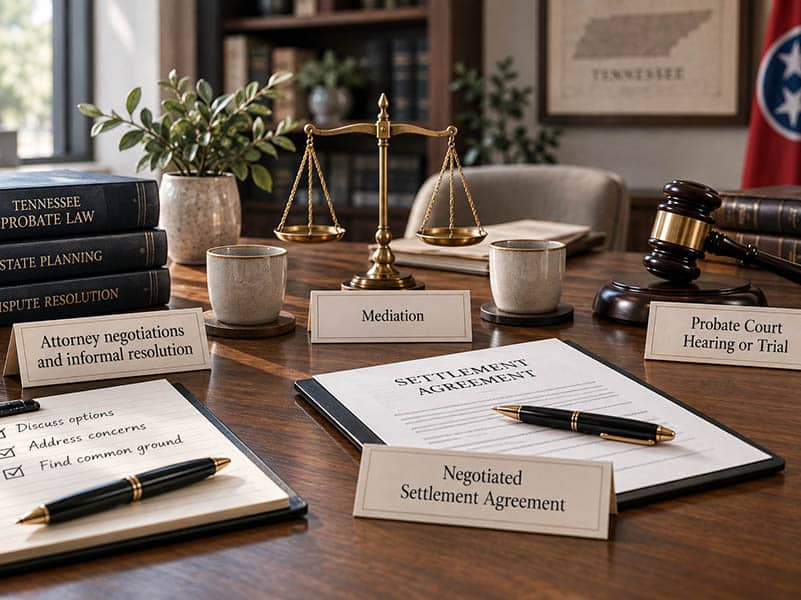
The right approach depends on the nature of the dispute, the parties’ cooperation, and the complexity of the legal issues involved.
The following ways can help resolve disputes:
Attorney negotiations and informal resolution
It can start with informal negotiations between the involved parties and could lead to a settlement or alternative dispute resolution, typically involving probate litigation attorneys at various points throughout a dispute.
Mediation
Another way is through mediation, which the court requires in almost any case to encourage settlement. All parties meet in the presence of a neutral mediator to help resolve their issues.
Another option is mediation, a formal proceeding in which a third-party mediator helps all involved discuss their differences and explore a possible settlement.
A Tennessee court may order mediation in an appropriate case, but mediation is not automatically required in every probate dispute.
Negotiated Settlement Agreement
When the parties agree, a dispute can end immediately with a written settlement. Since there are not so many limits on what the parties may agree upon, all options are on the table.
Probate Court Hearing or Trial
If the parties cannot resolve their dispute through negotiation or mediation, the matter may proceed to a hearing or trial before the probate court.
How Long Does Probate Litigation Take in Tennessee?
There is no standard timeline for probate litigation in Tennessee. Some disputes may be resolved in a few months through negotiation or mediation, while more complex cases can take longer.
The entire dispute or litigation timeline depends on the complexity of the legal issues, the evidence that must be gathered, the court’s schedule, and whether the case settles or proceeds to trial or appeal.
How Much Does Probate Litigation Cost in Tennessee?
Several factors influence the cost of probate litigation in Tennessee, including the dispute’s complexity, the amount of evidence involved, the number of parties, and whether the case settles or proceeds to trial.
Expenses may include attorney’s fees, court filing fees, deposition costs, expert witness fees, and other litigation-related expenses.
How to Prevent Probate Litigation and Estate Disputes?
Although not every conflict can be avoided, taking timely steps early can reduce the risk of costly litigation and help the estate move through probate more efficiently.
If you are an estate executor or administrator
As the personal representative, you have a fiduciary duty to act in the best interests of the estate and its beneficiaries.
- Learning about the estate’s special circumstances,
- Keeping accurate records,
- Protecting estate assets,
- Following the terms of the will and Tennessee law,
- Communicating with interested parties when appropriate, and
- Avoiding conflicts of interest or self-dealing,
may help you prevent estate disputes and probate litigation.
If you are a deceased’s heir or beneficiary
- Getting to know the deceased’s will and understanding your rights,
- Gathering the relevant information before making assumptions,
- Asking the estate’s personal representative reasonable questions,
- Keeping copies of important documents,
- Communicating effectively with the estate’s personal representative and asking reasonable questions you may have regarding the probate process,
may help prevent misunderstandings, address concerns early, and reduce the risk of an unnecessary probate dispute.
Whether you are a personal representative, heir, or beneficiary, obtaining guidance from a Tennessee probate attorney as concerns first arise may help handle potential issues before they develop into expensive litigation.
Your Next Step
Estate disputes can become complicated quickly, especially when family problems or disagreements existed before a loved one’s death.
If you have concerns about your loved one’s estate or have been appointed as an estate personal representative, contact our office at (629) 240-7760 or book a consultation to discuss your legal options and get guidance on probate litigation in Tennessee.
FAQ About Probate Litigation in Tennessee
What is the difference between probate process and probate litigation in Tennessee?
The probate process refers to the administration of a deceased person’s estate, while probate litigation involves a contested legal matter that requires a court resolution.
Can you contest a will in Tennessee?
Yes. Any interested individual with legal standing may contest a will when they have justified concerns such as undue influence, lack of testamentary capacity, fraud, forgery, or improper execution.
Can beneficiaries sue an executor in Tennessee?
Yes. A beneficiary may take legal action against an executor for an alleged breach of fiduciary duty, such as mismanagement, self-dealing, or misuse of estate assets, the available legal remedy depending on the circumstances.
Can an executor be removed in Tennessee?
Yes. A Tennessee court may remove an executor for misconduct, failure to perform required duties, mismanagement of estate assets, or other legally sufficient grounds.
Do all probate disputes go to trial?
No. Many disputes may be resolved through negotiation, mediation, motions, or settlement.